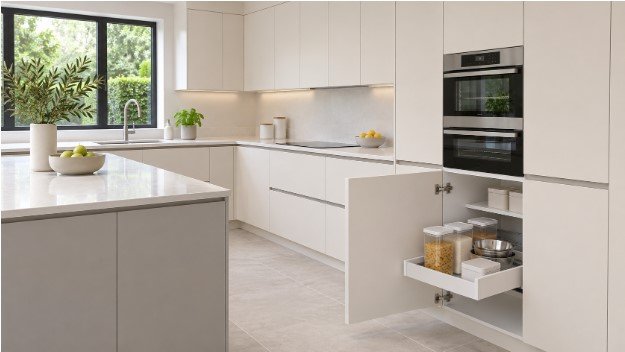
A kitchen can have plenty of cabinets and still feel difficult to use. Large cookware may catch on narrow openings, shelves may hide everyday items, and an awkward drawer arrangement can interrupt meal preparation. These problems make cabinet construction worth considering alongside appearance.
Frameless cabinetry offers one approach to planning accessible storage and a visually continuous cabinet arrangement. However, the absence of a front face frame does not automatically solve every storage problem. Cabinet dimensions, hardware, interior fittings, and installation still shape the result.
For homeowners in Orland Park, Illinois, considering a Milania kitchen, the useful starting point is how the room needs to function. Understanding the construction first makes it easier to assess finishes, compare layouts, and ask the right questions before ordering.
Understand What Changes When the Face Frame Is Removed
When reviewing frameless Milania cabinets, begin with the cabinet opening. Frameless cabinets do not have the additional face frame found around the front of a framed cabinet box. Instead, hinges attach to the cabinet sides. This construction can provide less obstructed access to the interior, although the usable opening still depends on the specific cabinet, hinges, and fittings.
The difference can matter when storing larger objects. A mixing bowl, stockpot, or small appliance needs to pass comfortably through the opening as well as fit inside the box. However, avoid assuming that every frameless cabinet offers the same storage capacity. Panel thickness, drawer construction, and internal hardware all take up space. Compare actual usable measurements rather than relying on exterior dimensions.
Also, separate construction from appearance. Frameless describes the cabinet box system; it does not establish the door material, surface finish, or quality of every component.
Turn Easier Access Into Useful Everyday Storage
A more open cabinet entrance only helps when the interior suits its contents. Before choosing units, list what you need to store and where you use those belongings. For example, preparation tools should sit close to the counter where chopping and mixing happen. Meanwhile, cookware needs convenient access near the cooking area without creating conflicts with an oven or dishwasher door.
Deep drawers can bring pots and bowls into view. Shelved cabinets may work better for taller belongings, while vertical dividers can reduce the need to stack baking trays.
| Everyday item | Storage arrangement to consider | Detail to confirm |
| Heavy cookware | Deep drawers | Load rating and usable dimensions |
| Mixing tools | Shallow organized drawers | Space for longer utensils |
| Serving trays | Vertical dividers or suitable shelves | Opening width and height |
| Small appliances | Adjustable shelving | Weight, clearance, and access |
| Food containers | Divided drawer storage | Room for containers and lids |
Check accessories against the exact cabinet model. A pull-out organizer may need clearance around hinges or reduce the interior width available for storage. Leave some flexibility too. Household needs change, and an arrangement filled with highly specific fittings may become less useful later. Choose organizers that solve clear problems rather than adding them to every cabinet.
Review the Cabinet Lines Across the Whole Room
Frameless kitchens often use closely spaced fronts to create a continuous appearance. This makes the relationship between doors, drawers, appliances, and finished panels especially noticeable. Look at an elevation drawing showing each cabinet wall straight on. Check where horizontal drawer lines meet adjoining doors and how tall units relate to the rest of the arrangement.
Several narrow cabinets create a different visual rhythm from fewer wider units. Neither is automatically better, but the storage plan and appearance should support each other. Pay attention to exposed ends and island backs as well. These surfaces may be visible from a living or dining area, even though they do not appear prominently in a front-facing cabinet drawing.
Hardware also affects the pattern. Long pulls can emphasize horizontal lines, while smaller handles create a quieter detail. Test the grip and placement rather than selecting hardware from a photograph alone. Finally, consider whether every cabinet needs to make a statement. A restrained arrangement can give flooring, lighting, or a distinctive countertop room to stand out.
Compare Matte, Gloss, and Textured Fronts in Real Light
Once the layout works, finish selection becomes more focused. The Milania page lists matte, gloss, and textured choices, but the best fit depends on the room and the specific collection available. For readers considering a smooth-front appearance, comparing flat-panel cabinet doors can help clarify how broad, uninterrupted surfaces change the kitchen’s overall look. Confirm which designs belong to the chosen cabinet system before making a final selection.
Gloss finishes reflect surrounding light and objects. This can create a lively surface, but it may also make reflections or marks more noticeable under certain lighting conditions. Matte finishes produce a softer reflection. However, matte does not automatically mean fingerprint-proof or easier to clean. Performance depends on the actual surface material and its treatment.
Textured finishes introduce another layer of visual interest. Some resemble wood grain, although appearance alone does not establish that a front uses solid wood. Review complete samples upright in the kitchen. Check daylight, ceiling lighting, and the view from adjoining rooms. A small sample under showroom lights cannot show every effect across a full cabinet wall.
Balance the Cabinet Finish With Counters and Flooring
A streamlined cabinet front still needs to work with the surrounding materials. Countertops, backsplash tile, flooring, and wall color influence whether the finished kitchen feels calm or crowded. Start with anything you intend to retain. Existing flooring can narrow the suitable cabinet colors, while a countertop with strong movement may guide the level of texture elsewhere.
If the cabinet finish has pronounced grain or pattern, consider a quieter backsplash. Alternatively, a plain cabinet surface can leave more room for expressive stone or gently patterned tile. White and gray finishes deserve careful comparison. Their undertones can become clearer beside another material, making a seemingly neutral sample appear warmer or cooler than expected.
For an Orland Park kitchen update, gather samples in the actual room before approving them. Keep cabinet samples vertical and countertop samples horizontal to better represent the finished arrangement. You do not need every surface to match. Look for a relationship between colors and textures, then decide which element should attract the most attention.
Check Installation Clearances and the Complete Order
The finished appearance depends on accurate installation as well as product selection. Uneven floors and walls need to be addressed while cabinets remain properly aligned and secured. Because closely spaced fronts create visible lines, door and drawer adjustment matters. Ask how the installer will check alignment and confirm that every front opens without rubbing.
Corners and wall-adjacent cabinets need particular attention. Handles, door thickness, and hinge movement may require fillers or additional clearance. Frameless construction does not remove these layout requirements. Use exact appliance specifications during planning. Refrigerator doors, dishwashers, and ovens can affect access to nearby storage even when their closed dimensions fit the drawing.
Review the written order against the approved layout. Confirm cabinet sizes, drawer arrangements, finishes, exposed panels, toe kicks, hardware, and accessories. Also, separate included work from additional costs. Delivery, assembly, installation, removal, and changes to plumbing or electrical connections may appear under different parts of the project budget.
Use Samples and Written Details to Make the Final Decision
Before ordering, inspect a working cabinet if possible. Open the doors, extend the drawers, and examine the surfaces and edges. Ask whether the hardware and materials on display match the proposed order. Bring a few useful measurements to the discussion. The dimensions of a frequently used appliance or large serving dish can turn a general conversation about storage into a practical cabinet check.
For local planning, the Kitchen Cabinet Design showroom in Orland Park IL provides a location reference when arranging a visit. Confirm which Milania samples or displays are available before making the trip. Request written specifications and care instructions for the selected finish. Also, ask about warranty coverage, replacement components, and the process for reporting an installation adjustment.
Frameless cabinetry can support a streamlined kitchen with convenient access, but the best result comes from the complete plan. Match interiors to everyday belongings, review finishes in real lighting, and resolve clearances before ordering. Milania should be assessed through the actual units, samples, and specifications proposed for your home. Those checks help turn an appealing design into a kitchen that remains comfortable to use.
Frequently Asked Questions
Do frameless cabinets always provide more usable storage?
Removing the face frame can improve access, but usable capacity depends on cabinet dimensions, panel thickness, drawers, and fittings. Compare interior measurements and openings before assuming one cabinet will hold more than another.
Are frameless cabinets the same as flat-panel cabinets?
No. Frameless describes cabinet construction, while flat-panel describes the appearance of the door front. A smooth door does not identify the box construction, so check both details when comparing cabinet collections and specifications.
How should matte and gloss cabinet finishes be compared?
View full samples under your kitchen’s daylight and evening lighting. Check reflections, visible marks, texture, and cleaning guidance. Choose based on the specific surface and your preferences rather than assuming either finish performs better.